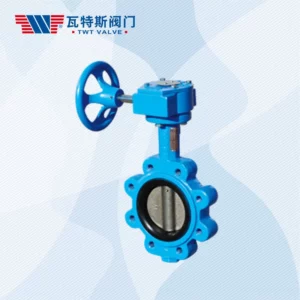
A butterfly valve is called so because its disc or plate that controls the flow of the fluid resembles the shape of a butterfly. The valve consists of a circular disc or plate with a pivot in the middle. When the valve is in the closed position, the disc lies perpendicular to the flow of fluid, blocking the flow. When the valve is in the open position, the disc rotates around the pivot, allowing fluid to flow through the valve.
The disc of the butterfly valve is typically thin and lightweight, making it easy to operate and control the flow of fluid. The shape of the disc is similar to that of a butterfly’s wings, with two halves that are symmetrical and resemble the shape of a butterfly when the valve is partially open.
Butterfly valves are commonly used in a wide range of applications because they are simple, lightweight, and cost-effective. The name “butterfly valve” is now widely accepted and used because of its resemblance to the shape of a butterfly’s wings when the valve is partially open.
How do butterfly valves compare to other types of valves?
Butterfly valves have several advantages and disadvantages when compared to other types of valves.
Here’s a comparison of butterfly valves with some other common types of valves:
Globe Valves: Globe valves are commonly used for applications that require precise flow control. They have a more complex design than butterfly valves and are typically more expensive. Globe valves can handle high-pressure applications better than butterfly valves but are not as effective at handling large volumes of fluid.
Ball Valves: Ball valves are similar to butterfly valves in that they have a simple design and are relatively inexpensive. However, ball valves are not as effective at handling high volumes of fluid as butterfly valves and are typically used in applications that require precise flow control.
Gate Valves: Gate valves are commonly used in applications that require a high degree of flow control. However, they have a more complex design than butterfly valves and are typically more expensive. Gate valves can handle high-pressure applications better than butterfly valves but are not as effective at handling large volumes of fluid.
Pinch Valves: Pinch valves are used in applications that require a high degree of flow control and are commonly used in the pharmaceutical and food and beverage industries. However, lug butterfly valve they are typically more expensive than butterfly valves and require more maintenance.
Overall, butterfly valves are a popular choice for applications that require a simple, lightweight, and cost-effective solution for controlling the flow of fluid. They are effective at handling large volumes of fluid and can be used in a wide range of applications, including water treatment, chemical processing, and food and beverage production. However, they may not be the best choice for applications that require precise flow control or high-pressure applications.



 wen264311761